Transcript
Announcer:
Welcome to CE on ReachMD. This activity is provided by Global Learning Collaborativeand is part of our MinuteCE curriculum.
Prior to beginning the activity, please be sure to review the faculty and commercial support disclosure statements as well as the learning objectives.
Dr. Levy:
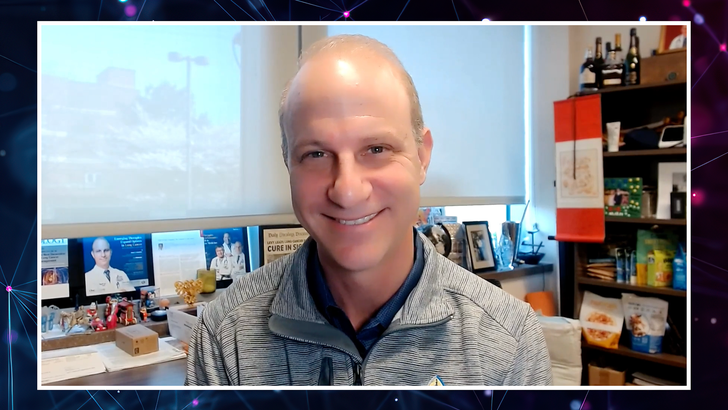
This is CE on ReachMD, and I'm Dr. Benjamin Levy. Today I'll be discussing management strategies for a multidisciplinary team approach to brain metastases.
Now, we need to remember that brain metastases have increased worldwide, with a reported 25% of cancer patients developing intracranial metastases. Now, some of this has to do with the fact that we've done quite well with targeted therapies and immunotherapies that have enhanced survival times, but this has paradoxically been associated with an increased incidence of developing brain mets. So this is front and center on how to manage this.
Now, when we think about management of brain mets, there are a range of considerations. We need to think about brain met size, number, location, associated symptoms, and the presence or absence of actionable mutations, and remember, importantly, shared decision-making with the patient. So this is not as easy as it once was. It's more complicated and more nuanced and more individualized, but this is of course leading to better outcomes.
And of course, when we think about this, it takes a village and a multidisciplinary approach, which includes medical oncology, radiation oncology, neurosurgery, neuro-oncology, and importantly supportive disciplines to help patients get through this.
In the past, of course, it's all been about radiation oncology approaches as well as surgery, but the advent of newer therapeutics has changed the game. From a medical oncology side, we need to remember that different drugs have different CNS penetrations and different CNS activity. Of course, leading the way are the targeted therapies. Targeted therapies have revolutionized the therapeutic algorithm and the treatment paradigm for patients with brain mets. We know that these drugs—these small molecule inhibitors—have the ability to cross the blood-brain barrier and elicit meaningful and durable responses in the brain. But a caveat is that not all targeted therapies are the same. Some have better CNS penetration than others. And I think it's important to remember that when you're thinking about leveraging these particular therapeutics in your clinic.
The second thing to remember is that some of these new drugs that aren't targeted therapies, like bispecifics, antibody-drug conjugates, and even immunotherapies, these drugs do have the ability or have shown CNS penetration and intracranial response rates. Now, they're not as high, generally, as the targeted therapies, but remember that some of these do get into the brain and may stave off the need for radiation.
So it's really important that you look those up when you're thinking about giving those. I get, a lot of time, second opinions on this where I'm surprised, as well as the primary oncologist, of how well some of these drugs may work in the brain. Again, this is always going to be a conversation with the radiation oncologist and the neurosurgeon.
From a radiation oncology side, we need to remember there are different modalities as well. There's stereotactic radiosurgery. There's a sophisticated form of stereotactic radiosurgery called Gamma Knife. And then there's whole-brain radiation therapy as well. Now, whole-brain radiation therapy is not something that we're using a lot, but there's also hippocampal-sparing whole-brain radiation therapy, which may preserve neurocognition. So it's really important, again, to understand there's different modalities from radiation oncology as well.
Finally, with neurosurgery, these techniques have also advanced. We need to keep in mind that some patients may be candidates for neurosurgery based on location, adjacent structures.
So all of this is a nuanced, personalized, individual decision for the patient.
Patient selection is important on who's going to get what. We need to prioritize outcome but partner those outcomes with toxicity and patient safety. It, again, is going to take a village to have an understanding of how best to treat these patients. We need to remember after the treatment, whatever it may be, we need to manage the toxicity of those modalities, whether it be radiation necrosis, whether it be potentially disease progression on a TKI that's not working. These are all really important considerations. And also, how do we do both? Are we going to do both radiation and systemic treatments? These are really where it takes a multidisciplinary approach.
And with that, my time is up. I hope I've given you something to think about. Thanks for listening.
Announcer:
You have been listening to CE on ReachMD. This activity is provided by Global Learning Collaborativeand is part of our MinuteCE curriculum.
To receive your free CE credit, or to download this activity, go to ReachMD.com/CME. Thank you for listening.
 In support of improving patient care, Global Learning Collaborative (GLC) is jointly accredited by the Accreditation Council for Continuing Medical Education (ACCME), the Accreditation Council for Pharmacy Education (ACPE), and the American Nurses Credentialing Center (ANCC) to provide continuing education for the healthcare team.
  This activity has been accredited by the European Board for Accreditation of Continuing Education for Health Professionals (EBAC®).
  Global Learning Collaborative (GLC) designates this activity for 1.0 contact hour(s)/0.1 CEUs of pharmacy contact hour(s).
  Global Learning Collaborative (GLC) has been authorized by the American Academy of PAs (AAPA) to award AAPA Category 1 CME credit(s) for activities planned in accordance with AAPA CME Criteria. This activity is designated for 1.0 AAPA Category 1 CME credit(s). Approval is valid until 05/07/2027. PAs should claim only the credit commensurate with the extent of their participation in the activity.